My Cart (0 )
Natural Coffee Alternatives: Barley, Chicory, Rice & Cassia Seeds
- Uncategorized
- September 16, 2025

For those seeking rich, coffee-like brews without caffeine, a variety of traditional ingredients offer unique flavors, health benefits, and cultural stories. Let’s dive into some popular caffeine-free options: grounded chicory, soluble chicory granules, Italian ground barley, Italian soluble barley granules, Japanese roasted genmai, a flavourful chicory blend and an almost unknown cassia seeds.
1. Italian Ground Barley & Italian Soluble Barley Granules
What It Is
In Italy, barley grains are roasted and either ground into a fine powder or processed into instant granules to make a popular coffee substitute known as caffè d’orzo. Much like chicory, caffè d’orzo gained popularity during World War II, when coffee was scarce. Today, it remains a beloved staple in Italian homes and cafés, appreciated for its warm, toasty aroma and nutty flavor.
It is made from the common barley (Hordeum vulgare) that we are familiar with. Koreans and Japanese also use barley as a beverage known as Boricha and Mugicha (麦茶) respectively.
| Feature | Caffè d’Orzo | Boricha | Mugicha |
| Origin | Italy | Korea | Japan |
| Main Ingredient | Hulled or pearled barley (ground) | Whole roasted barley (sometimes malted) | Whole roasted barley |
| Roast Level | Dark roast (coffee-like) | Light to medium roast | Medium roast |
| Preparation | Brewed like coffee (moka, espresso, French press) | Steeped like tea or cold brewed for several hours | Steeped like tea or cold brewed for several hours |
| Texture / Body | Thick, rich, espresso-like | Light, clear, tea-like | Light, clear, tea-like |
| Flavor | Nutty, toasty, slightly bitter | Toasted, mild, smooth | Roasty, mild, slightly savoury |
| Caffeine Content | Naturally caffeine-free | None | None |
Hulled barley retains the bran and germ layers (only the inedible outer hull is removed), preserving fiber, beta-glucans, vitamins, minerals, and the rich, nutty flavour appreciated in orzo coffee. The intact grain toasts more evenly and develops a richer, deeper aroma.
Barley being one of the most widely grown grains globally, requires less water than coffee plants, making roasted barley coffee a more environmentally friendly alternative to the actual coffee.
Health Benefits
- High in fiber and antioxidants, supporting heart health and digestion.
- Contains vitamins and minerals like selenium, magnesium, and B vitamins.
- Naturally caffeine-free and gentle on the stomach.
Tasting notes
Ground Barley
Roasted barley delivers a coffee-like aroma with delicate hints of toffee and caramel. Its flavor is smooth, mildly tangy, and leaves a lingering roasted caramel fragrance on the palate.
Soluble Barley Granules
One of the best coffee alternatives: rich and rounded with a sweet, caramel-like aroma reminiscent of coffee. It finishes with a smooth, milky-creamy aftertaste, and its deep, coffee-like fragrance lingers on the palate even longer than chicory.
Suitability with Milk:
Barley granules mix more smoothly with milk than ground barley, creating a naturally rich and robust coffee latte-like flavor, complete with a light, natural froth on top. For a mocha-style twist, simply add more milk.
Soluble barley granules: Espresso-like and naturally frothy without milk added.
2. Grounded Chicory & Chicory Soluble Granules
What It Is
Chicory root (Cichorium intybus L.) originated from the Mediterranean region and has been used as a coffee substitute since the 19th century, especially during coffee shortages in Europe during the Second World War. The roots are roasted and grounded to create a coffee-like powder or made into soluble granules as an instant beverage.
Health Benefits
- Supports normal liver function, promotes healthy bile flow, aids stomach and digestive health, helps relieve occasional loss of appetite, and acts as a diuretic to temporarily reduce mild fluid retention.
- Rich in inulin, aprebiotic fiber that promotes beneficial changes in gut microbiota composition, may help to regulate blood sugar, lipid metabolism, mineral absorption, is a mild sedative, relieve mild migraines.
- Naturally caffeine-free and low in calories.
Tasting notes
Ground Chicory
Medium-full body with a rich & robust taste – burst of sweet and tangy flavours with a characteristic warming chicory root aftertaste often described as nutty and woody. A well-balanced bitter aftertaste that lingers in the mouth. Almost like a robusta.
Soluble Chicory Granules
Roasted, with mushroom umami fragrance. Light-medium body. Sweet, with a vegetal taste and hints of bitterness.
Suitability with Milk:
Both ground chicory and granules do not go very well with milk. Milk overpowers the roasted notes while bringing out the tangy flavours.
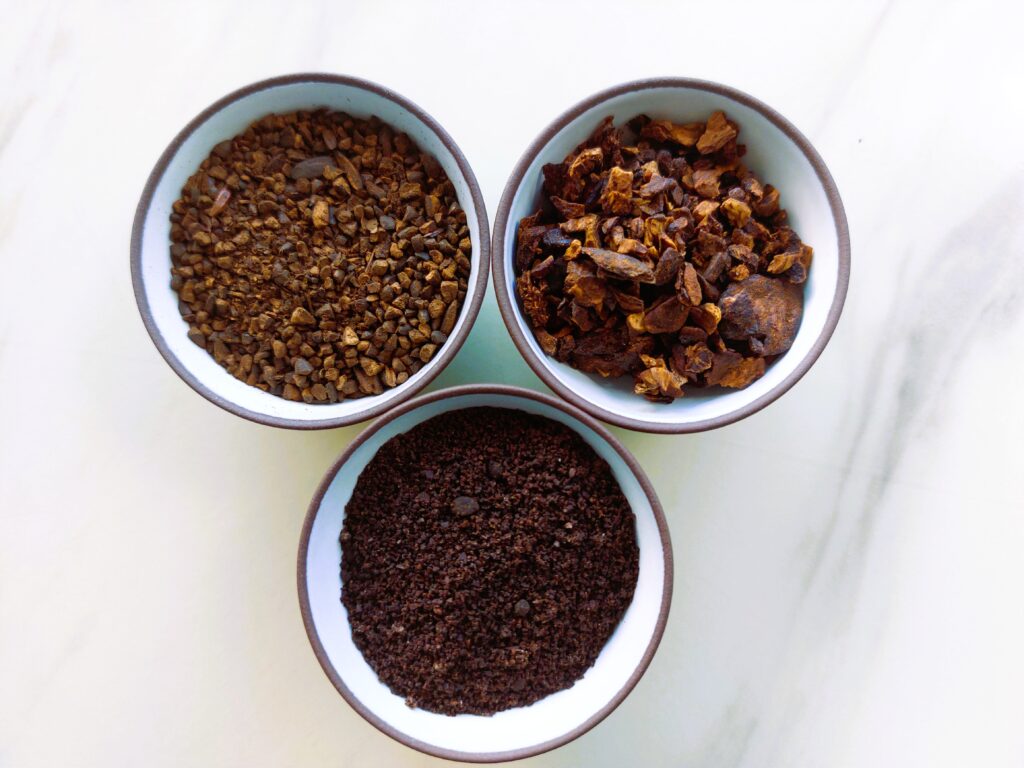
Top left clockwise: grinded barley, grinded chicory, grinded genmai
3. Japanese Roasted Genmai (Brown Rice Coffee)
What It Is
“Genmai” means brown rice in Japanese and valued for its warming properties and gentle, toasted flavour.
In earlier times, green tea was expensive and not easily accessible to the common people in Japan. To make it more affordable, roasted brown rice (a common, inexpensive staple) was added to the tea leaves. This reduced the amount of actual tea needed per serving, making the beverage more accessible to the general population.
Health Benefits
- Contains antioxidants and fiber from brown rice.
- Supports digestion and may have calming effects.
- Caffeine-free when consumed without green tea blends.
Tasting notes
Light to medium body, with fragrance of roasted rice and lightly burnt grains that resembles korean scorched rice, nurungji. A clean, light and very elegant coffee substitute, with a small hint of bitter-sweet aftertaste.
Suitability with Milk
It offers a distinctive creaminess and a fragrant, toasted rice bitterness that transforms into a smooth, rice-milk-like drink when more milk is added—leaving no trace of bitterness.
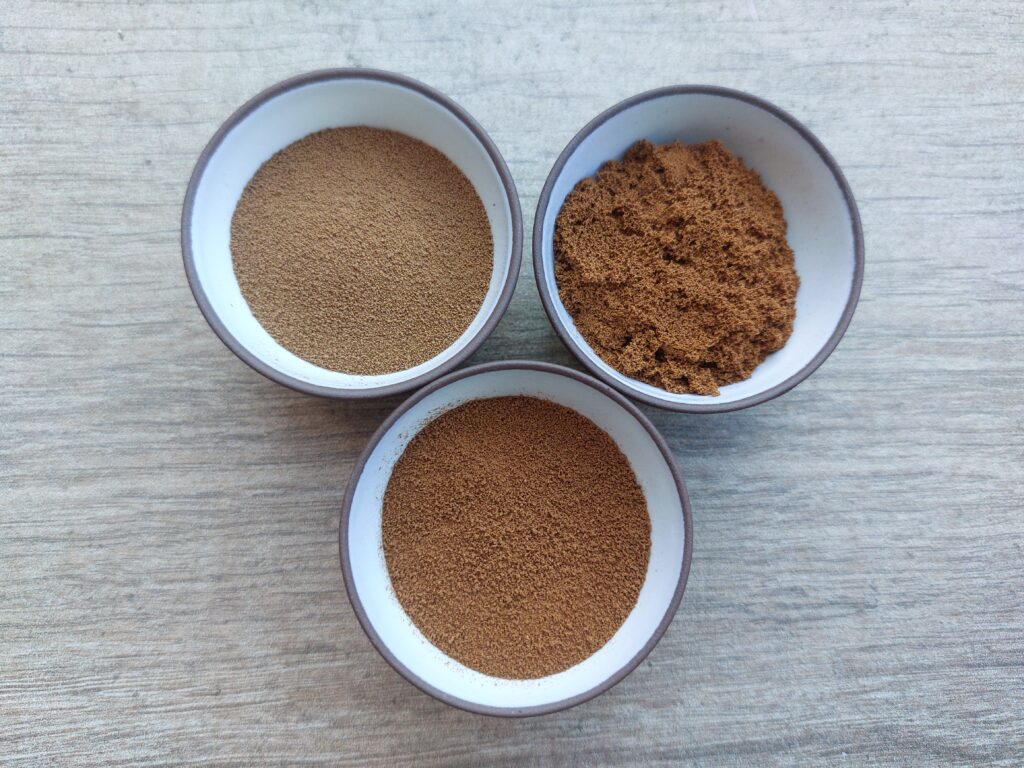
Top left clockwise: Barley, chicory, chicory blend. Chicory powder and chicory blend powder tend to appear clumpy—especially pure chicory—due to the high content of natural sugars in chicory.
4. Chicory Blend: Chicory, Wheat, Malted Barley, Figs, Acorns
What It Is
This blend combines roasted chicory, wheat, malted barley (make product less bitter), dried figs (sweetness), and acorns (gives strength), creating a complex, naturally sweet and earthy brew. Blends like this are actually more common than pure ingredients of chicory, barley or rice and easily found in American and European supermarkets.
Health Benefits
- Chicory: Digestive aid and prebiotic.
- Wheat & Malted Barley: Provide fiber, antioxidants, and B vitamins.
- Figs: Rich in fiber, vitamins, and minerals, adding natural sweetness.
- Acorns: Historically used as food, they contain healthy fats and antioxidants.
Tasting notes
Medium-bodied with a mocha-like character and a unique roasted coconut note. Deep, sweet, and well-balanced, it features a harmonious blend of acidity and bitterness, complemented by subtle hints of mushroom umami.
Suitability with Milk
This blend’s rich, sweet, and earthy notes pair perfectly with milk, creating a smooth roasted coconut-cream coffee flavor—free of acidity or bitterness.
5. Cassia seeds
What It Is
Cassia seeds are the dried seeds of the Cassia obtusifolia or Cassia tora plant, both of which are legumes commonly used in traditional Chinese and Ayurvedic medicine. They are not to be confused with cassia cinnamon (which comes from the bark of a different plant).
These seeds are small, hard, and usually brown or dark olive in color, with a smooth, glossy surface.
One of the best choices for home roasting as it is easily available in Chinese medical shops and very affordable!
Health Benefits
- Remove heat and relax bowels
- Improve eyesight, relief eye inflammation with pain, photophobia, lacrimination and blurred vision
- Headache and dizziness
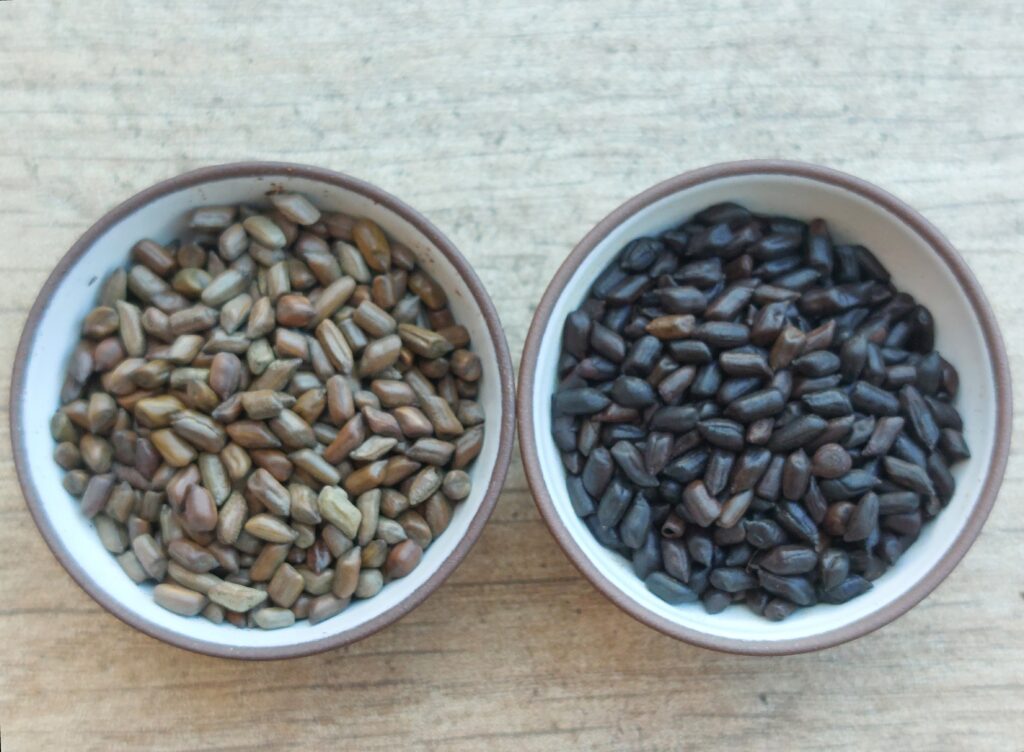
Left: unroasted cassia seeds. Right: roasted cassia seeds
Tasting notes
Unroasted cassia seeds have a mild, smooth flavour with subtle hints of coffee, caramel, and grassy undertones. They can develop a slight bitterness if steeped for too long.
Roasted cassia seeds, on the other hand, release a strong coffee-like aroma and produce a clear, light-bodied brew—reminiscent of a mild Blue Mountain coffee. When deeply roasted (see instructions below), they develop a rich, smoky fragrance that’s a delight for those who enjoy a slightly burnt coffee note often found in dark-roasted coffee.
Suitability with Milk
Pairs beautifully with milk, creating a uniquely creamy beverage with a rich, burnt coffee character. Sugar is optional, as there is very little bitter elements in roasted cassia seeds, unlike coffee.
Roasting instruction
Roast the cassia seeds at 175°C (247°F) for 75 to 90 minutes on the lower rack of the oven. During roasting, the seeds will begin to gently ‘pop’ and release a sweet, savory aroma reminiscent of roasted chestnuts or grains. At this stage, they do not yet carry the familiar coffee-like scent. Stir the seeds occasionally.
Unlike popcorn, which is done once it pops, cassia seeds need to roast further—continue until the aroma deepens into a roasted coffee fragrance, eventually developing a burnt note. If you enjoy the bold scent of burnt coffee, extend the roasting time by an additional 10–15 minutes beyond the standard 90 minutes.
To brew, use about 20 grams of roasted seeds per 200 ml of boiling water.
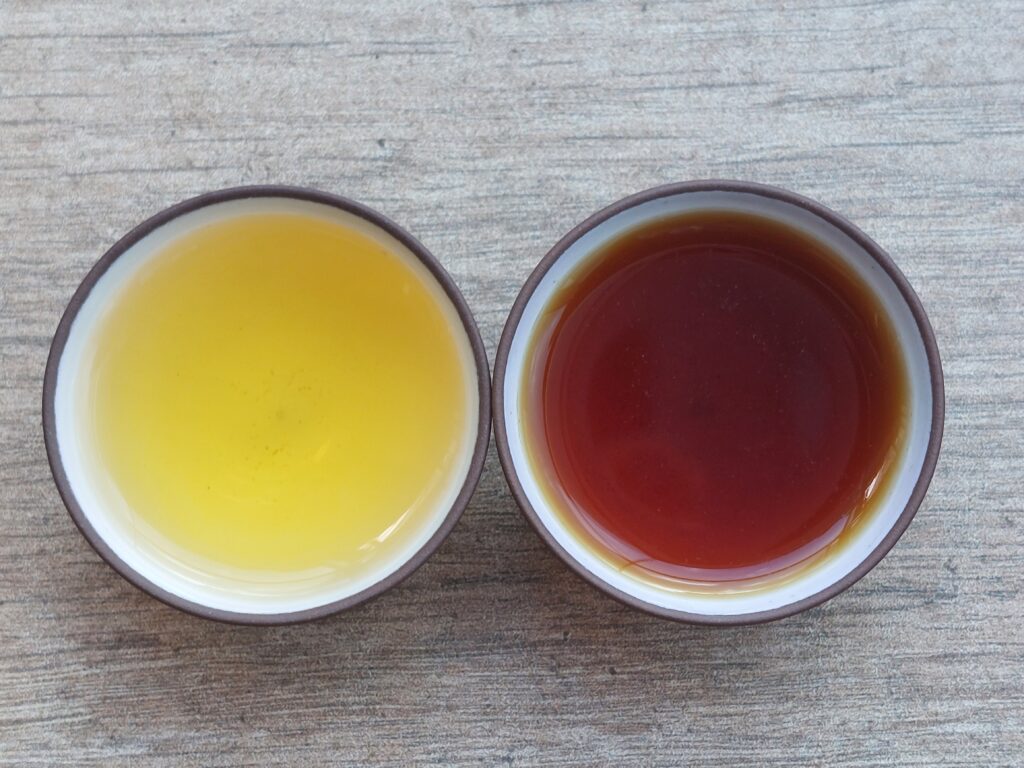
Left: unroasted cassia seeds. Right: roasted seeds
Summary
If you enjoy rich black coffee, opt for Italian barley grinds and barley powder — they offer a deep, roasted flavour that’s surprisingly close to the real thing. But if you value convenience and prefer your brew with milk, Italian barley granules are the way to go. The granules are so fine – almost like a powder – that they can even be used as a caffeine-free substitute for coffee powder in desserts like Tiramisu!
If you enjoy refined coffee like Blue Mountain, go for roasted cassia seeds (just remember not to over roast unless you like the smoky style)! Special mention: Chicory blend taste more like roasted coconut than coffee but is great especially with milk – like a roasted coconut dessert.
Final Thoughts
There are many ingredients that can serve as coffee substitutes, including roasted dandelion root, roasted burdock root, roasted wattle seed, roasted rye, and carob. Dandelion and burdock root are relatively inexpensive options, while wattle seed tends to be more costly due to its limited availability and native sourcing. Each of these alternatives offers a unique flavour profile and nutritional benefits, making them suitable for those looking to reduce caffeine intake or simply explore new, roasted beverages.