My Cart (0 )
No insects, no Beauty. Oriental Beauty or Baihao oolong?
- Tea Reviews - Oolong Teas
- July 23, 2026
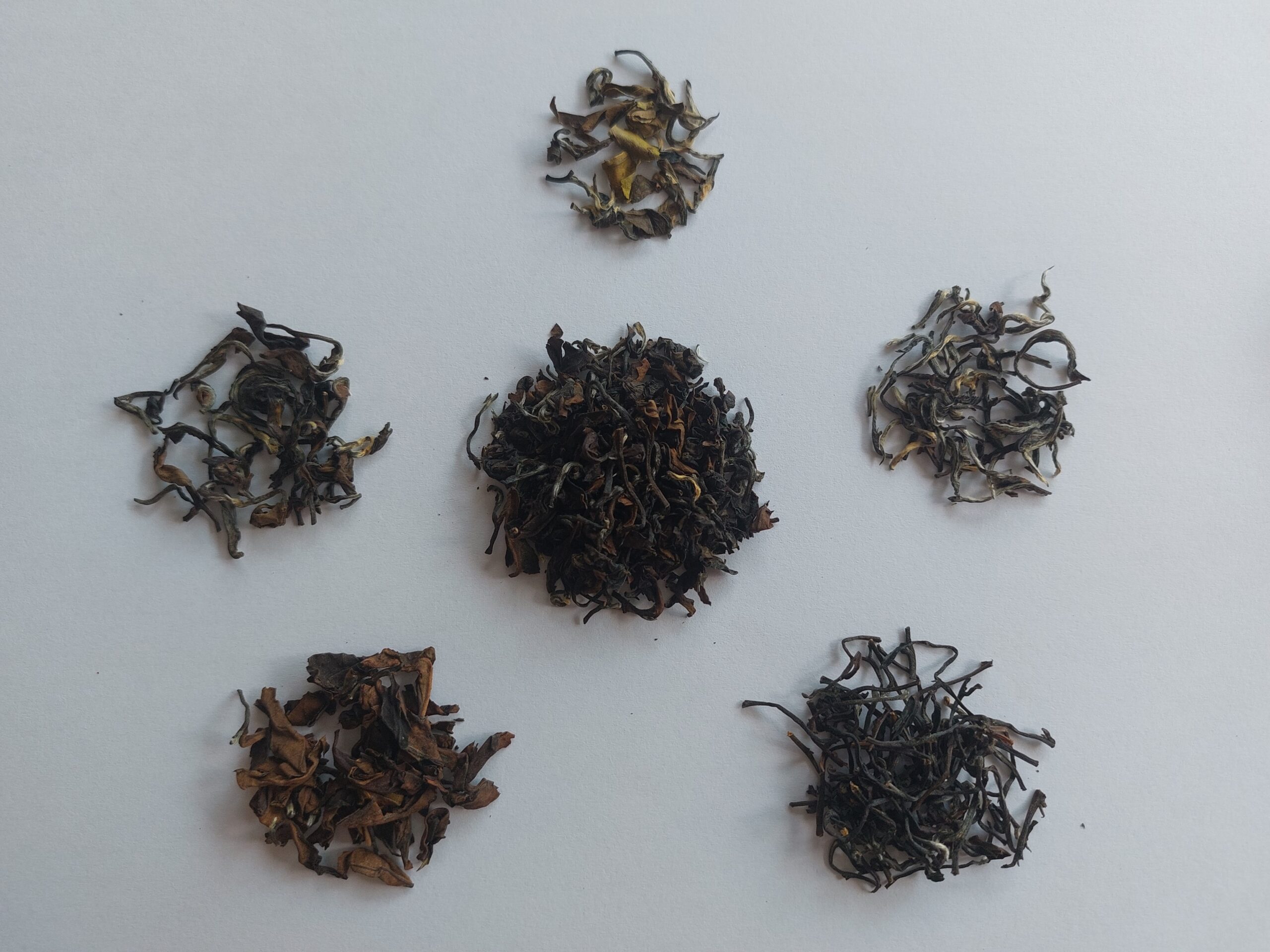
You would probably have heard of these tea names: 东方美人 (dōng fāng měi rén), 白毫乌龙 (bái háo wū long), 膨 (椪) 风茶 (pèng fēng chá), 五色茶 (wǔ sè chá), 貴妃烏龍 (guì fēi wū lóng), 香槟乌龙 (xiāng bīn wū long). They all refer to the same tea, with only minor differences. Let’s start with Baihao oolong.
What is 白毫乌龙 (Baihao oolong)
This name refers to fresh leaves from the Qingxin Damao (青心大冇, qīng xīn dà mǎo) tea plant that have been bitten by leafhoppers (Jacobiasca formosana) during the summer (early May to early June).
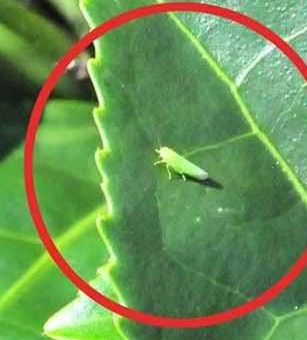
The leafhopper is much smaller in size than the leaf. Leafhopper size is around 0.2cm
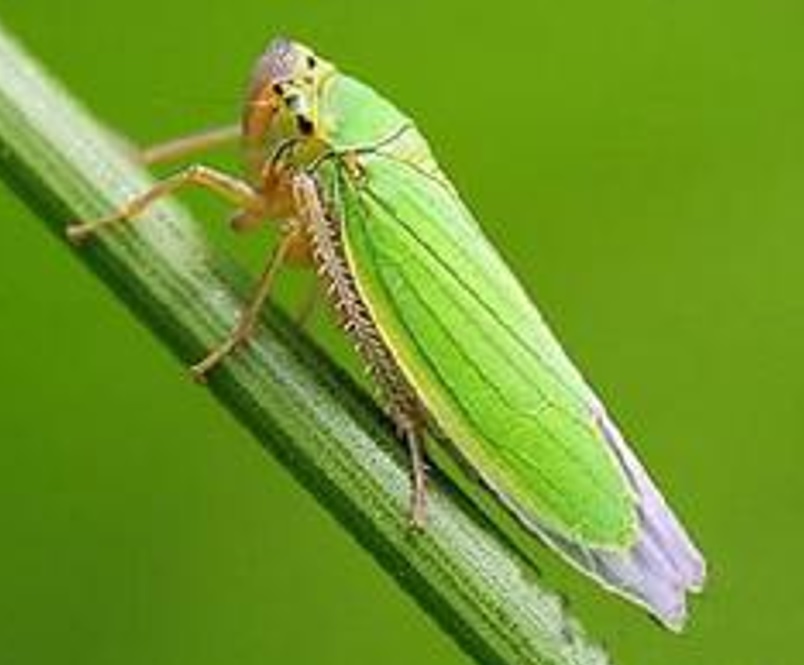
Close up of leafhopper.
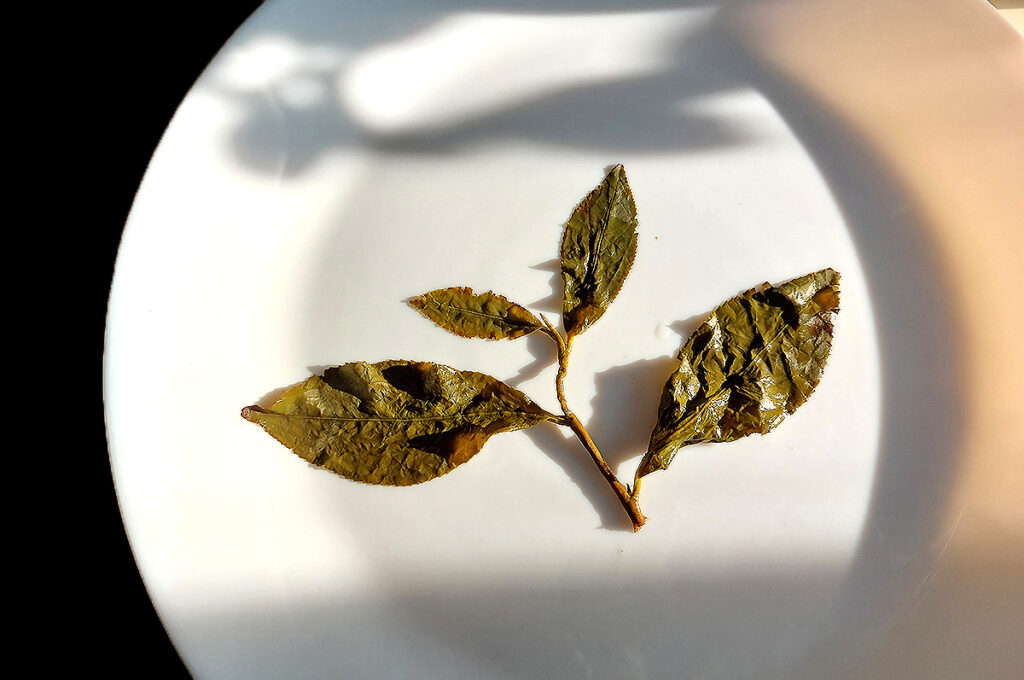
When leafhoppers feed on the young tea leaves, they trigger the plant’s natural defense responses while the leaves are still attached to the bush. The bitten areas curl and develop a yellow-brown discoloration, and the affected young leaves cease growing into normal mature leaves. In response to the insect attack, the tea plant activates defense hormones such as salicylic acid (SA) and jasmonic acid (JA). A portion of these hormones is converted into the volatile aromatic compounds methyl salicylate (MeSA) and methyl jasmonate (MeJA), which can serve as airborne signals to warn neighboring plants of herbivore attack and may help attract natural enemies of the leafhoppers. While some of these fragrant compounds are produced on the living plant, many continue to form or are released after harvest during tea processing. During withering and especially tossing (bruising), enzyme activity and controlled oxidation enhance the production of MeSA, MeJA, and numerous other aroma compounds, contributing to the characteristic honeyed and floral fragrance of insect-bitten teas such as Oriental Beauty.
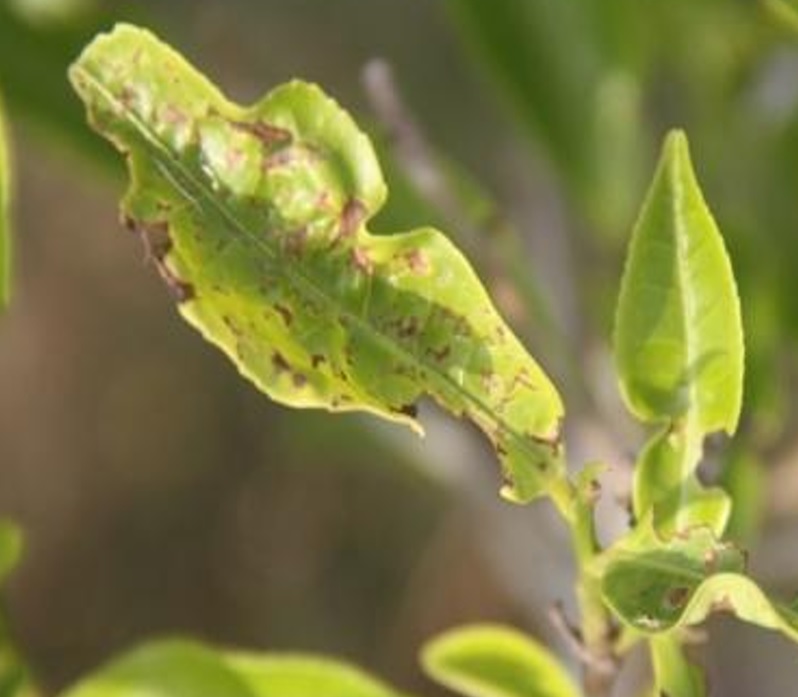
Buds bitten by the leafhopper
The more a leaf is bitten, the stronger its honey and fruit flavours will be. These special leaves are then harvested and processed as follows:
- Outdoor Withering – The leaves are withered outdoors for about 4 hours to reduce moisture and soften the leaves.
- Indoor Withering with Tossing – Leaves are brought indoors for approximately 10 hours and vigorously tossed every 2 hours. This step results in medium to heavy oxidation (about 60–70%), representing a heavy withering and tossing process.
- 杀青 (shā qīng) – The leaves undergo this step to deactivate enzymatic activity, effectively stopping further oxidation.
- 湿闷 (shī mèn) – Wetting / Fermentation – Leaves are wrapped in cloth and placed in bamboo baskets or metal tins for a second fermentation of 10-30min. Because the leaves are still relatively moist, water within the leaf can migrate to the drier sections, softening the leaf structure and preventing breakage during the subsequent rolling and shaping. This process enhances its honeyed and fruity fragrance. This unique fermentation step sets Baihao oolong apart from other oolongs and is central to its distinctive aroma and taste.
- Rolling – Leaves are shaped into either strip-shaped or ball-shaped forms, depending on the desired final appearance.
- Drying – Leaves are dried with little or no roasting, another hallmark of Baihao oolong. In contrast, most Taiwanese oolongs with similar oxidation levels undergo some degree of roasting.
Unlike other oolong teas, which oxidize only during withering (in Step1 and especially in Step 2), Baihao oolong undergoes oxidation twice—first as a natural response to leafhopper feeding and then again during the withering process.
Since the leafhoppers prefer tender leaf buds (because these parts have softer tissues, making them easier to feed on) which are covered with fine white downy hairs, the tea is called 白毫 (bái háo), which literally means “white fine hairs”. See photo below.
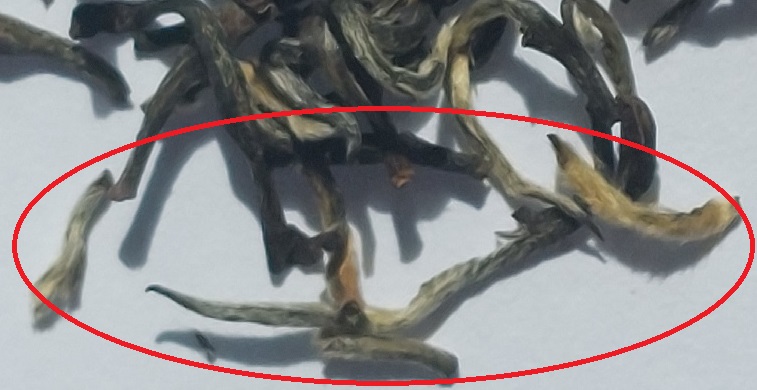
To encourage and sustain a healthy leafhopper population, pesticide use must be avoided. The insects’ feeding activity is an essential part of the process that gives the tea its unique honey-like fragrance.
For this reason, tea for Baihao Oolong is typically harvested as “one bud and two leaves.”
(This means the newest unopened bud and the first two young leaves beneath it are plucked.)
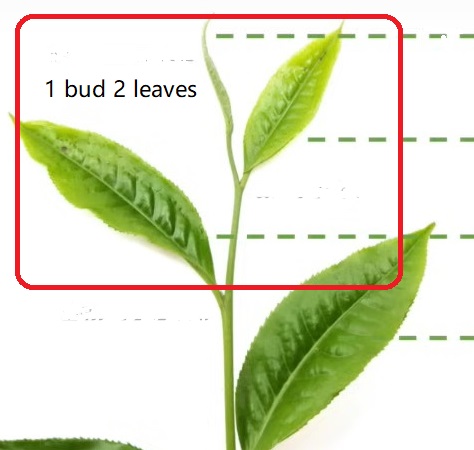
This is unusual compared to other Taiwanese oolongs, where mature leaves (1bud and 3-4 leaves) are preferred for their sturdier structure, higher accumulation of flavour compounds, and better suitability for rolling process, which shapes the leaves into the characteristic round, ball-like form of many oolong teas. Baihao Oolong instead relies on the delicate, insect-bitten young leaves, which are essential for developing its signature honeyed aroma.
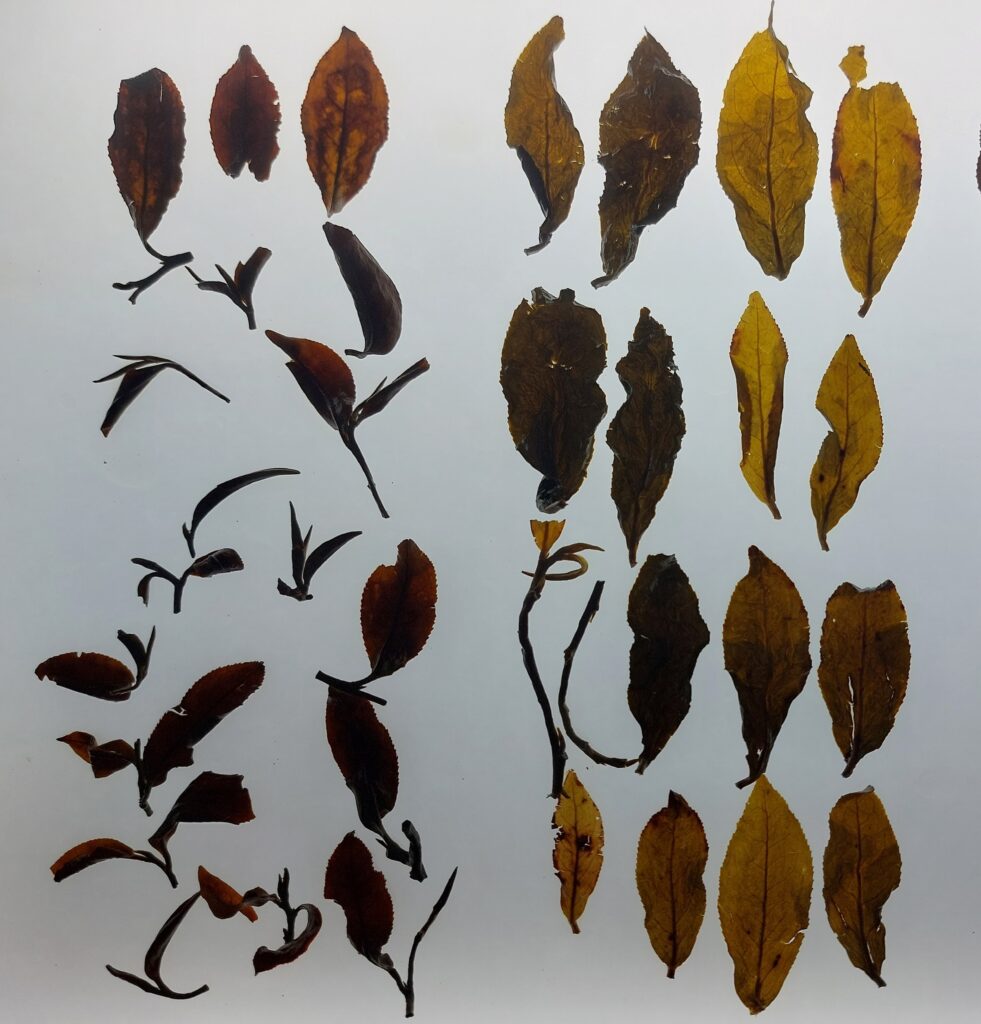
Left: Oriental Beauty. Right: Baihao Oolong (Alishan). The size difference between the two teas is clearly visible. Oriental Beauty consists predominantly of buds and small, young leaves, whereas Baihao Oolong is composed of larger, more mature leaves.
Origin of Baihao oolong
This tea originated from the Hakkas, during the Japanese colonial days and is mostly found in Northwestern Taiwan:
- 新竹县北埔 (Xīn zhú xiàn Běi pǔ) & 峨眉 (É méi) – tea from these 2 places fetch the highest prices
- 苗栗县头份 (Miáo lì xiàn Tóu fèn) & 头屋 (Tóu wū) – these 2 places fetch the 2nd highest prices
- 新北市石碇区 (Xīn běi shì Shí dìng qū),桃园市龙潭区 (Táo yuán shì Lóng tán qū).
Baihao oolong and the cultivar 青心大冇
Qingxin Damao (青心大冇) is a small-leaf tea variety known for its remarkable resilience. It thrives in dry conditions and shows strong natural resistance to pests—especially the leafhopper (Jacobiasca formosana). This allows the cultivar to grow well under natural pest pressure with little or no pesticide use while still producing high-quality tea. By contrast, many other tea varieties cannot tolerate leafhopper feeding and would suffer severe damage or reduced yield.
A Variety Once Overlooked
Despite its adaptability, high yield, and ease of cultivation, Qingxin Damao was not initially a favoured cultivar. Before farmers discovered its value in making insect-bitten tea, it was considered difficult to process into high-end products. If the leaves were not handled with precision during withering and fermentation, they often developed bitterness or grassy, coarse flavors. As a result, high-quality batches were rare, and the cultivar was mainly used for low-priced teas.
A Turning Point in the Late Qing Dynasty
Everything changed during a particular growing season in the late Qing dynasty, when leafhopper infestation was unusually widespread. Nearly every shoot had been bitten, leaving farmers with two options: Process the damaged leaves or lose the entire harvest.
They processed them.
Unexpectedly, the resulting tea carried a distinctly sweet, honeyed, fruity aroma—a flavor profile now recognized as the hallmark of Baihao Oolong.
When merchants brought the tea to market, it sold for exceptionally high prices, far beyond what the farmers had ever earned. Upon hearing this, the farmers assumed the merchants were exaggerating—“blowing wind,” or 膨风 (péng fēng) in Taiwanese/Hokkien dialect. But the prices were real, and soon the tea itself became known as Péng Fēng Chá (膨风茶).
According to popular accounts, the tea was reportedly presented to Queen Victoria in the late nineteenth century, and the name Oriental Beauty (东方美人 or Dongfang Meiren) is said to have been inspired by her admiration of its appearance and aroma.
From Obscurity to Importance
Although Qingxin Damao is not as famous as cultivars like Jinxuan, Qingxin Oolong, or Sijichun (Four Seasons Spring), it remains the fourth most widely planted tea variety in Taiwan. More importantly, it is almost exclusively used in Taiwan for the production of Baihao Oolong.
So why is Dongfang Meiren (Oriental Beauty) more widely used than Baihao Oolong?
Taiwan’s Tea Research and Extension Station (TRES) uses Dongfang Meiren (Oriental Beauty) rather than Baihao oolong in its official list of Taiwan’s specialty teas because Dongfang Meiren denotes a distinct, uniquely Taiwanese tea style with clearly defined production standards and regional identity. The traditional name Baihao oolong (“White Tip Oolong”) originally referred to the tea’s abundance of white-haired buds and became closely associated with this insect-bitten oolong. However, because baihao (白毫, “white hairs”) is itself a general descriptive term for the fine silvery hairs found on young tea buds and leaves—including those of teas unrelated to Dongfang Meiren—the official designation Dongfang Meiren more precisely identifies this specific Taiwanese specialty tea. To be labeled as Dongfang Meiren, the tea must be grown and produced in Xinzhu (新竹) or Miaoli (苗栗), have strip-shaped leaves, be medium- to heavily oxidized with light roasting, display dry leaves in five distinct colors, and be produced from leaves that have been fed upon by tea green leafhoppers. The resulting tea liquor ranges from golden yellow to amber and is characterized by its distinctive honeyed aroma and flavor.
Dongfang Meiren signifies its origin in northwestern Taiwan, and teas produced in a similar style elsewhere in the country are not allowed to use this name. Here, we have two teas made using the same processing methods: one from its traditional home in Xinzhu (新竹县) and another from Alishan, illustrating how location influences both naming and taste.
Dongfang Meiren from Xinzhu
Farmers avoid pesticides and fertilizers to preserve the leafhopper population. Growing on acidified, low-altitude land without fertilizers, the plants remain small and produce fewer buds. Harvest takes place over a brief two-week period, and only leafhopper-bitten leaves are selected, requiring careful handpicking. It takes approximately 3 kg of fresh leaves to produce 1 kg of finished tea, which helps explain its high price.
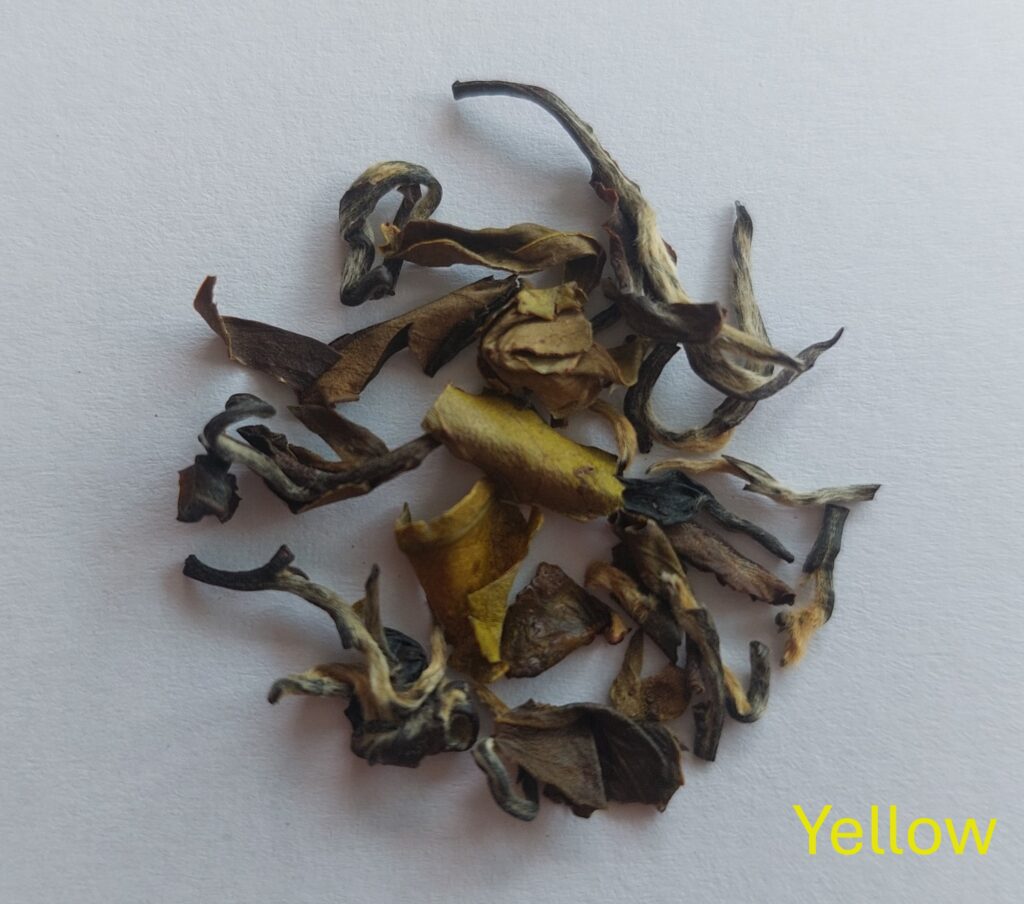
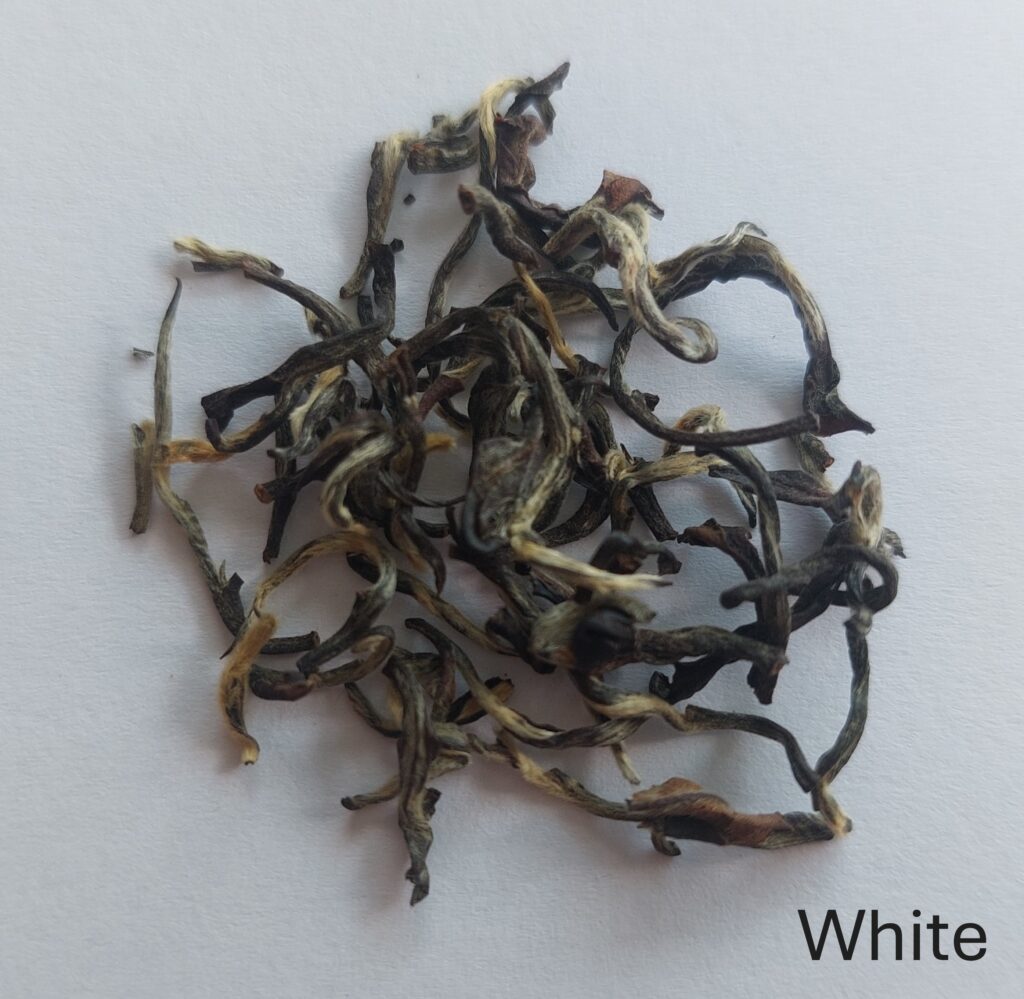
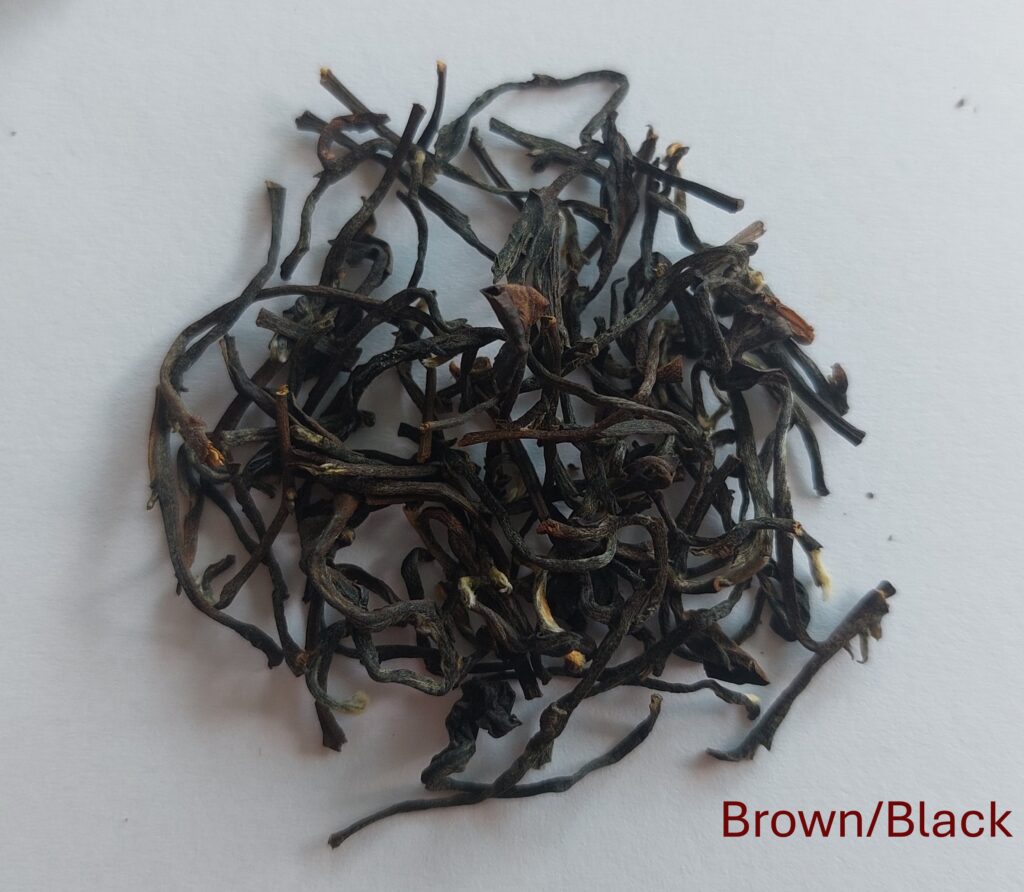
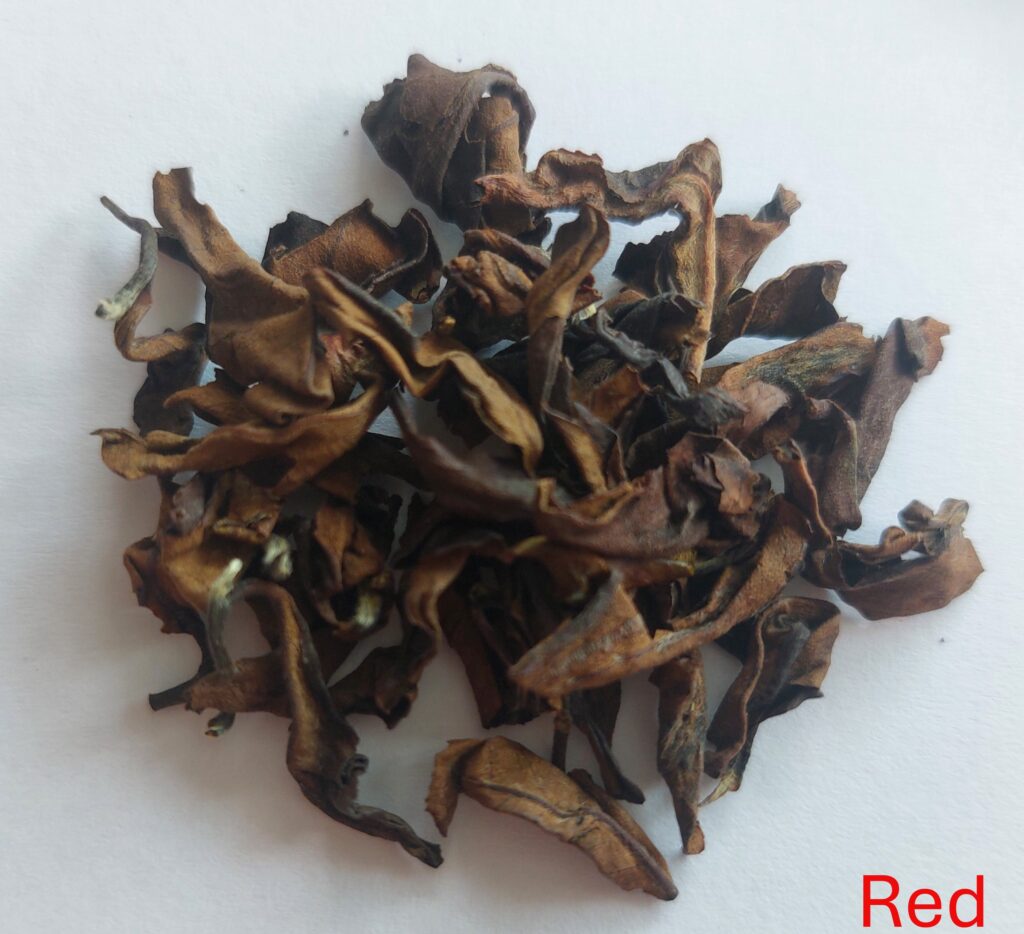
A less commonly used name for Dongfang Meiren is Five-Color Tea (五色茶), referring to the five colors present in the leaves: red and green from the leaves, white from the downy hairs on the buds, and brown from the stems. In top-quality teas, a fifth color—yellow—appears, indicating that the leaves have undergone the perfect balance of natural oxidation and leafhopper interaction, which directly enhances the tea’s flavor.
If leaves are not bitten or just lightly affected by insects, then using the same method of production, product appears generally black in colour.
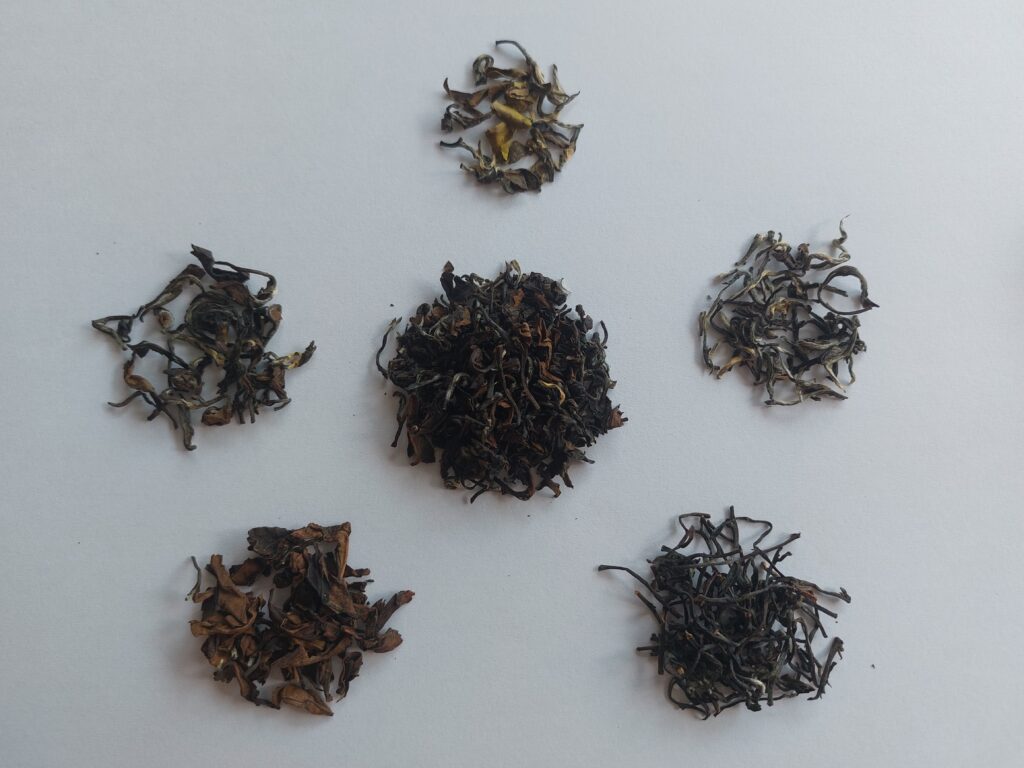
Dongfang Meiren tea displayed at the center, surrounded by five representative groups of tea leaves representing its characteristic five-color composition. Starting from the top and proceeding clockwise, the leaf colors are yellow, white, brown/black, red, and dark green.
Tasting notes (Dongfang Meiren)
The tea is light, honeyed, and elegant, remaining smooth and free from bitterness even during long steeps. For optimal flavor, brew at 80–85°C, allowing 5–7 infusions to fully appreciate its delicate character.
Dongfang Meiren’s fruity character has also been described as grape-like or muscatel so it is also called 香槟乌龙 or Champagne oolong.
Close-up images of each representative leaf color are shown in the below.
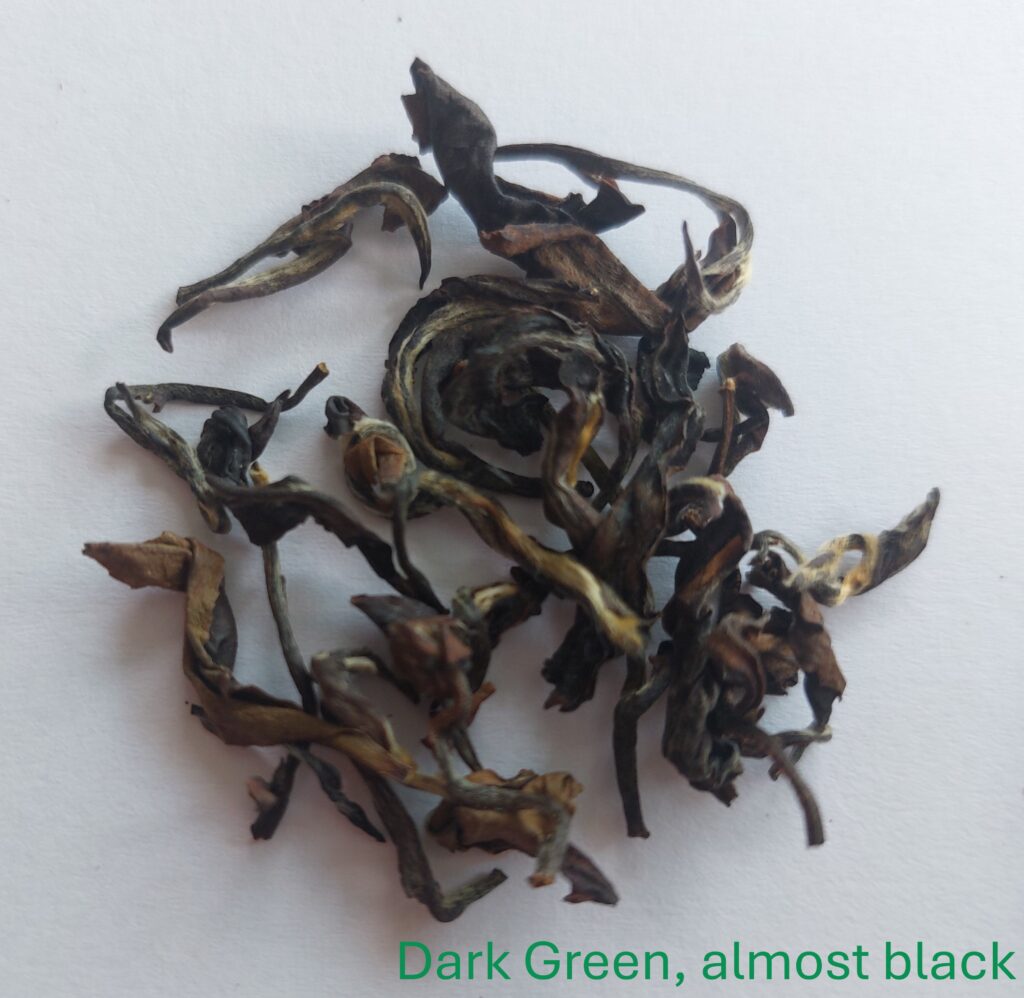
Baihao Oolong (白毫乌龙) from Alishan – 石桌茶区
Although Baihao Oolong and Dongfang Meiren share many similarities, they differ in several important ways. Both teas are heavily oxidised and are traditionally made from leaves that have been bitten by tea leafhoppers. However, Baihao Oolong is typically moderately roasted, while Dongfang Meiren is lightly roasted.
Another key difference lies in where the tea is grown. Dongfang Meiren is cultivated mainly in the lowlands, where summer arrives earlier. Harvesting usually begins in May, and the warmer, more humid climate causes the tea leaves to mature more quickly. These leaves tend to be thinner and more delicate, making them better suited to the traditional strip-shaped style. Rolling such thin leaves into tight balls would require heavy pressure, causing the dried leaves to break into small fragments or powder.
Baihao Oolong, by contrast, is generally produced in the highlands, where cooler temperatures delay the arrival of summer. Harvesting typically begins in June, after the tea buds have enjoyed a longer growing period of one to two months. This slower growth produces thicker, fleshier leaves that can withstand the heavy rolling needed to create the tea’s characteristic round, ball-shaped appearance. The compact ball shape helps protect the finished leaves from breakage during packaging and transport. It also reduces the tea’s volume, making it more economical to package, store, and ship.
In summary, while both teas are heavily oxidised, Baihao Oolong is moderately roasted, high-grown, harvested later, and rolled into balls, whereas Dongfang Meiren is lightly roasted, low-grown, harvested earlier, and processed into strip-shaped leaves.

Top: Dongfang Meiren (Xinzhu), Left: Baihao Oolong (Alishan), Right:Guifei Oolong (Lugu)
The plantations where our Baihao Oolong grows are primarily reserved for spring and winter high-mountain oolongs, with no harvesting in summer to allow the plants to rest between seasons. Within these plantations, there are isolated patches and plantation edges that are more difficult to maintain, so the tea plants there are left to “grow wild.”
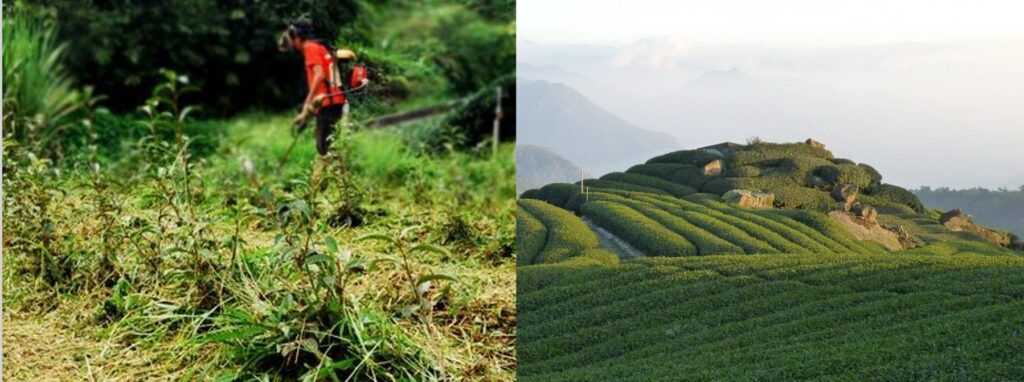
Left: Wild grown plantation (left) vs cultivated plantation (right)
Tasting notes (Baihao Oolong from Alishan)
With its longer growth period, Baihao Oolong develops a deeper, more robust body and a pronounced honeyed flavour. Over steeping can cause bitterness, so it is recommended to brew with 80-90°C water temperature for no more than 30 seconds to extract an intense, balanced flavour. The leaves can be re-steeped 5–7 times.
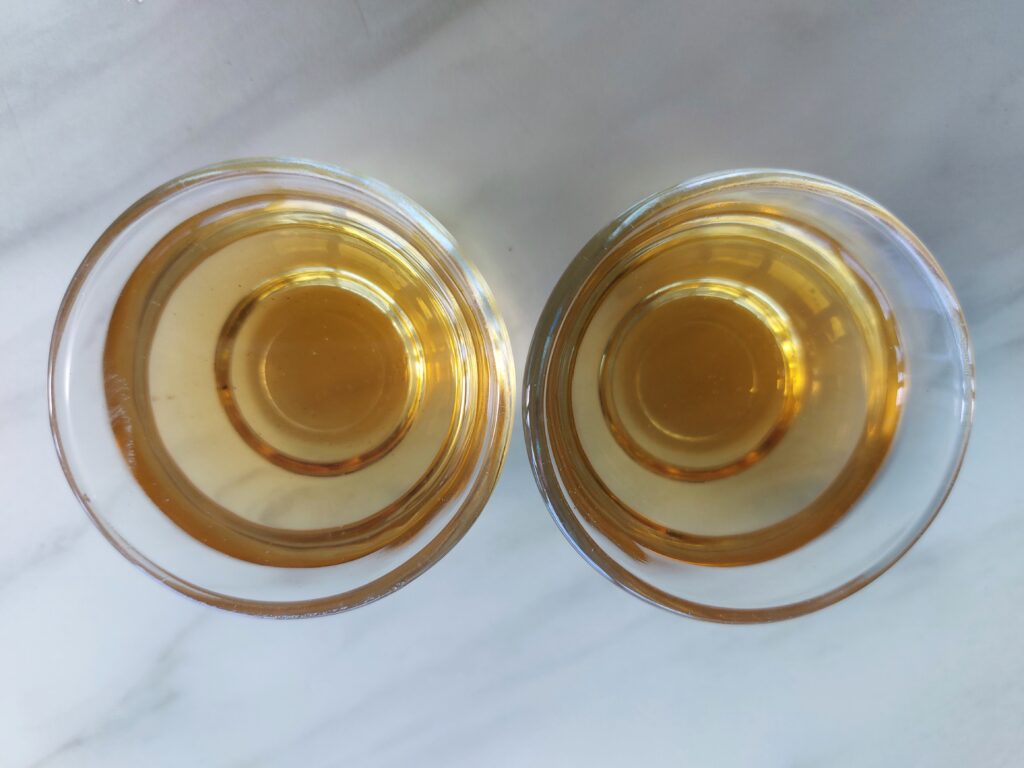
Left: Dongfang Meiren, Right: Baihao Oolong
Other teas were later developed from Dongfang Meiren, including 蜜香绿茶 (green tea), 蜜香红茶 (black tea) – closely associated with 花莲瑞穗 (Hualien, Ruisui), 蜜香红乌龙 (a roasted oolong with nutty and caramel flavours), all being developed from leaves being bitten by the leafhopper.
| Feature | Oriental Beauty (東方美人) | Other Taiwanese Oolong |
|---|---|---|
| Insect interaction | Requires tea green leafhopper feeding (“着蜒”, Jacobiasca formosana) to develop its characteristic profile. The insect feeding is an essential part of the tea’s identity. | Usually grown without intentional insect feeding; aroma mainly comes from cultivar, terroir, oxidation, rolling, and roasting. |
| Reason for aroma | Leafhopper feeding triggers plant defense responses, including jasmonic acid (JA) and salicylic acid (SA) pathways. Insect-induced precursors are transformed during oxidation and processing into honeyed, fruity, and floral aroma compounds. | Aroma is mainly shaped by cultivar genetics, terroir, oxidation level, enzymatic reactions, rolling, roasting, and storage. |
| Harvest material | Young shoots with visible leafhopper feeding marks; traditionally selected from tender growth, often emphasizing 1 bud with 2–3 young leaves. The insect-damaged shoots are retained because they contain the biochemical changes responsible for the distinctive aroma. | Many Taiwanese oolongs use 1 bud with 3–4 leaves as raw material, providing sufficient mature leaf material for rolling and processing. |
| Bud appearance | Famous for silver-white buds (“白毫”) and the characteristic multi-colored appearance of processed leaves (green, yellow, red, brown, and white). | Usually greener buds and more uniform leaf appearance, depending on cultivar and processing style. |
| Oxidation and roasting style | High oxidation (often ~60–80%, approaching black tea levels) with low to light/medium roasting. The restrained roasting preserves the delicate honey, fruit, and floral aromas created by leafhopper feeding and oxidation. | Processing styles vary. Traditional high-oxidation Taiwanese oolongs often combine higher oxidation with medium to heavy roasting to develop deeper roasted, caramelized, and mature flavors. |
| Main aroma profile | Distinctive honey aroma, with supporting notes of ripe fruit, floral sweetness, and a muscatel-like character. | Aroma varies by style, ranging from floral and creamy notes to roasted, caramel, fruity, or mineral characteristics. |
Final Thoughts
Research has examined the impact of saliva from reared leafhoppers on the flavour of Oriental Beauty. One day, mechanical techniques may be developed to mimic leafhopper damage while delivering lab-produced saliva, potentially giving rise to new expressions of Oriental Beauty tea.